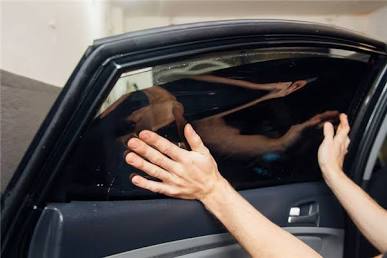
Queensland summers are brutal. With the sun beating down on the M1 or the Bruce Highway, driving without tint feels like sitting in an oven. Naturally, most vehicle owners want the darkest possible film to block that heat and glare.
However, before you upgrade your car for the holidays, it is crucial to understand the darkest legal tint qld regulations. The Queensland Department of Transport and Main Roads (TMR) has strict rules about how much light must pass through your windows. If you go too dark, you risk a hefty fine, a defect notice (yellow sticker), and potentially voiding your insurance coverage.
At R1 Auto, we want your car to look great and stay cool, but we also want you to stay legal. In this guide, we explain the VLT limits and window tint laws qld drivers must follow to stay safe on the road.
Understanding VLT: The Key to Compliance
To understand tint laws, you first need to understand “VLT.” This stands for Visible Light Transmission . It is the percentage of light that passes through both the glass and the film combined.
- Higher VLT (e.g., 70%): More light passes through (lighter tint).
- Lower VLT (e.g., 5%): Less light passes through (darker tint).
Many drivers make the mistake of buying “35% film” and applying it to glass that is already slightly factory-tinted. If the factory glass blocks 30% of light and you add a 35% film, the combined VLT might drop below the legal limit, making your car non-compliant.
What Are the Specific Limits?
So, what is the darkest legal tint qld actually allows? The rules differ depending on which window you are tinting.
1. Front Windscreen
You are not allowed to apply any tint to the main part of the front windscreen. The only exception is a visor strip at the very top.
- The Rule: The strip must not extend below the top 10% of the windscreen or below the wiper arc sweep.
- Allowed Tint: You can use any darkness for this strip, provided it doesn’t obstruct the driver’s view.
2. Front Side Windows (Driver & Passenger)
These are the most critical windows for driver visibility.
- The Limit: Must have a minimum of 35% VLT .
- Why? This ensures that at night or in poor weather, you can still see side mirrors and pedestrians clearly. It also allows police to see the driver.
3. Rear Side Windows & Rear Windscreen (Passenger Cars)
For standard sedans, hatchbacks, and wagons (classified as “Passenger Vehicles” or MA category):
- The Limit: Must also have a minimum of 35% VLT .
- Common Myth: Many people believe you can go darker on the rear of a sedan (like 20%), but in Queensland, passenger cars are generally capped at 35% all around.
4. Rear Windows (Commercial & Goods Vehicles)
This is where legal tint qld rules get interesting. If your vehicle is classified as a “Goods Carrying Vehicle” (like a Ute, Van, or some large SUVs classified as MC/NA categories):
- The Limit: You may be allowed to go darker on windows behind the driver (rear sides and rear screen), sometimes as dark as 20% VLT or even lower, provided you have external rear-view mirrors on both sides.
- The Catch: You need to check your vehicle’s compliance plate. If it lists the vehicle as a “Passenger Car,” you must stick to the 35% rule.
Why Risking “Limo Tint” Isn’t Worth It
We often get asked for “5% Limo Tint” all around. While it looks sleek and offers maximum privacy, using illegal tint carries significant risks:
- Police Defect Notices: Police carry portable light meters. If you test below the limit, you will be issued a fine and a defect notice. You will then have to pay to remove the tint and pay again to have legal tint re-applied.
- Insurance Denial: If you are in an accident - especially at night - an insurance assessor can deny your claim by arguing that your illegal tint reduced your visibility and contributed to the crash.
- Safety: Trying to park or merge lanes at night with 5% tint is incredibly difficult and dangerous.
How to Get Heat Rejection Without Breaking the Law
Here is the good news: You don’t need pitch-black windows to block heat.
Technological advancements in nano-ceramic films mean that a legal 35% ceramic tint can block more heat than a cheap, illegal 5% dyed tint.
- Old Tech: Relied on darkness (dye) to shade the interior.
- New Tech: Relies on ceramic particles to reflect infrared radiation.
This means you can stick to the window tint laws qld mandates and still achieve massive cooling benefits. At R1 Auto, our premium ceramic films are designed to provide maximum heat rejection while keeping your VLT within the legal safety zone.
Conclusion
Navigating legal tint qld standards doesn’t have to be confusing. The safest bet for most Queensland passenger car owners is to stick to the 35% VLT standard on all side and rear windows. This gives you a uniform, sleek look, keeps you safe from fines, and ensures your insurance remains valid.
If you want the “blacked out” look for privacy, talk to us about our darkest legal ceramic options. We can help you achieve that aggressive aesthetic while ensuring your vehicle remains 100% compliant with TMR regulations.
Ready to tint your car legally? Don’t guess with the law. Contact R1 Auto today. We can check your vehicle type and install the highest-performance legal tint available, right at your doorstep.